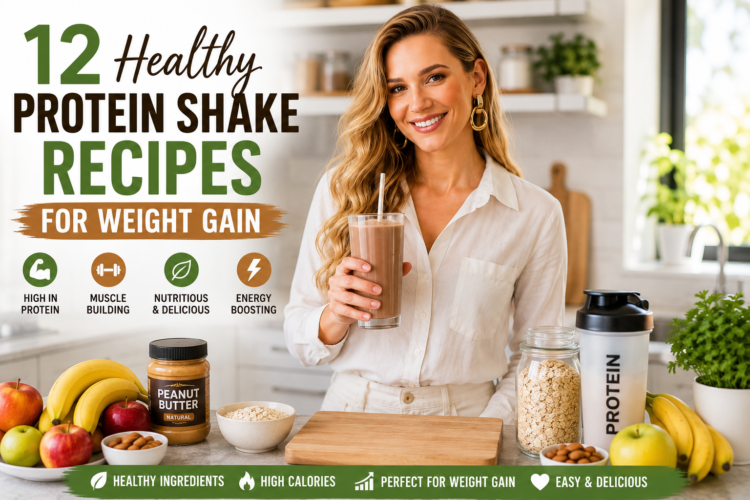
If you’re trying to gain weight, protein shakes can be one of the easiest ways to add extra calories and protein to your day without forcing down another full meal. A well-made shake can deliver hundreds of calories, a solid dose of protein, and useful carbs and fats, all in a few minutes, using ingredients you probably already have in your kitchen. Homemade protein shakes are especially useful for people who struggle to eat enough throughout the day, have a fast metabolism, or are recovering their appetite after illness or intense training.
That said, it’s worth being clear from the start: healthy weight gain isn’t about one magic shake. It comes from consistently eating enough total calories, getting sufficient protein, and building meals around a variety of nutrient-dense foods. A shake is a tool that fits into that bigger picture, not a replacement for it.
Below you’ll find 12 healthy protein shake recipes for weight gain, ranging from classic peanut butter and chocolate combinations to fruity, coffee-flavored, and plant-based options, so there’s something for almost every taste and dietary preference.
What Makes a Protein Shake Good for Weight Gain?
A shake built for weight gain needs more than just protein powder and water. The best recipes combine several calorie-dense ingredients so each glass delivers meaningful energy along with muscle-supporting protein.
Protein is the foundation, it supports muscle repair and growth, especially important if you’re combining weight gain with strength training. Carbohydrates, from fruit, oats, or dates, provide quick energy and help push up the calorie count. Healthy fats, from nut butters, avocado, or seeds, are calorie-dense and help slow digestion, which can be useful if you’re trying to eat more without feeling overly full too quickly.
Useful ingredients to build a weight-gain shake around include Greek yogurt, whole milk, oats, nut butter, ripe bananas, avocado, seeds like flax or hemp hearts, and dates. Mixing a few of these together — rather than relying on just one, is usually what turns a light snack into a real calorie contributor.
12 Healthy Protein Shake Recipes for Weight Gain
1. Chocolate Peanut Butter Greek Yogurt Shake
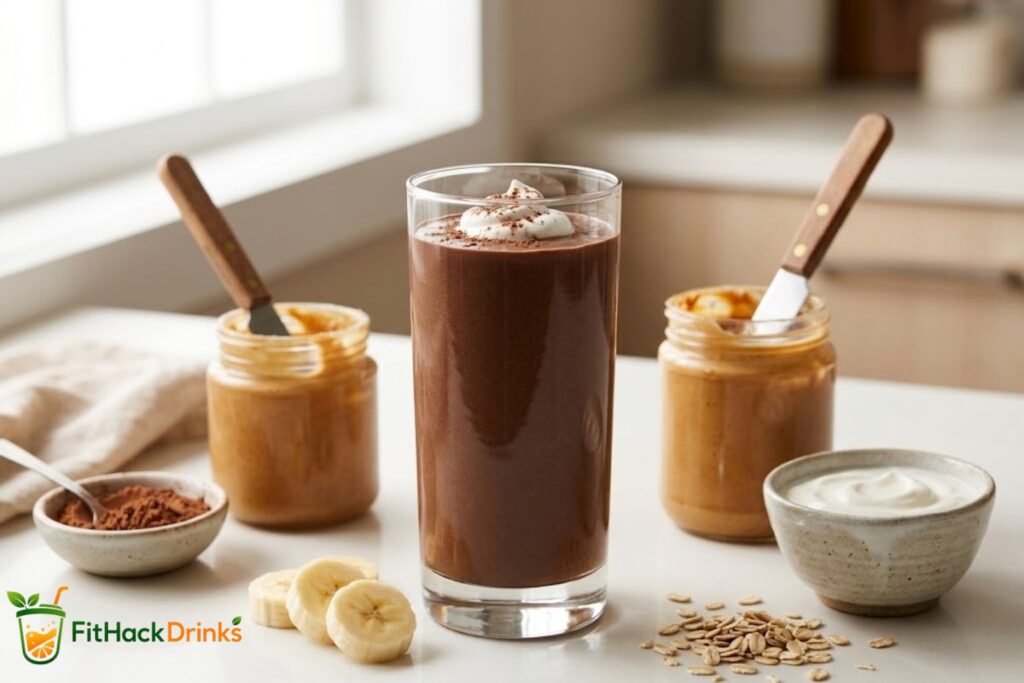
Ingredients (1 serving)
- 1 ripe banana (frozen preferred)
- 1 cup whole milk
- 1/2 cup full-fat Greek yogurt
- 2 tablespoons peanut butter
- 1 tablespoon unsweetened cocoa powder
- 1 tablespoon honey
- 1/2 cup ice
Instructions
- Add the milk and Greek yogurt to a blender first.
- Add the banana, peanut butter, cocoa powder, and honey.
- Blend on high for 30–45 seconds until smooth.
- Add the ice and blend again until creamy.
- Pour into a glass and serve immediately.
Nutrition Per Serving (approximate)
- Calories: 560
- Protein: 26 g
- Carbohydrates: 55 g
- Fat: 26 g
Why It Works for Weight Gain The combination of whole milk, full-fat Greek yogurt, and peanut butter packs in protein, healthy fats, and calories without needing a large volume of liquid. The banana and honey add natural carbs for extra energy.
Recipe Tip Use a ripe, frozen banana for a thicker, milkshake-like texture.
2. Triple Berry Protein Smoothie with Egg Whites
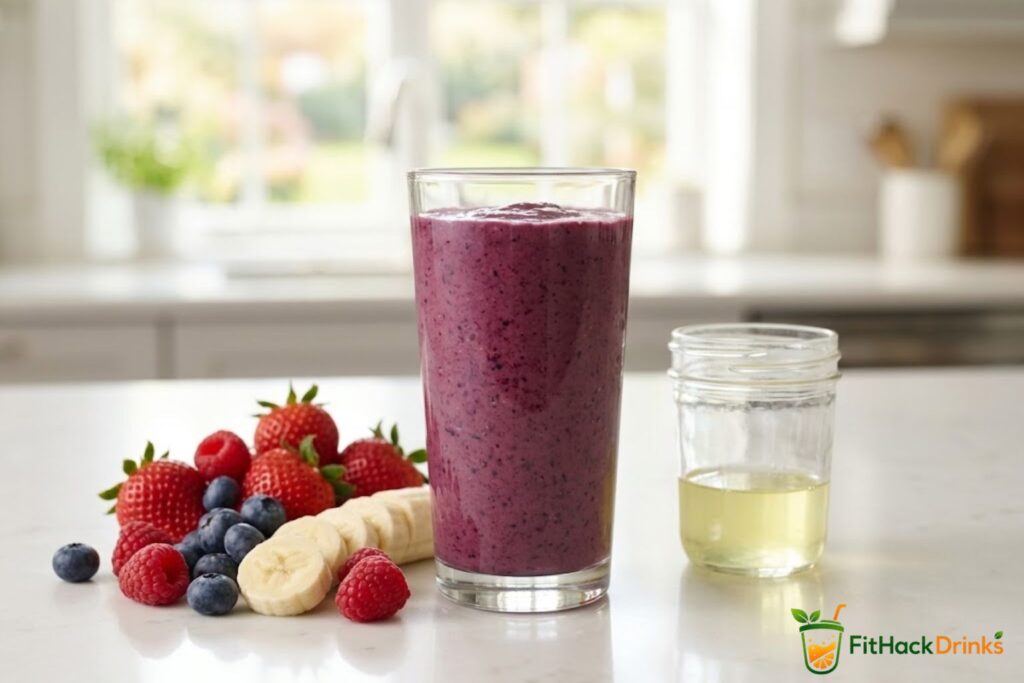
Ingredients (1 serving)
- 1/2 cup strawberries
- 1/2 cup blueberries
- 1/4 cup raspberries
- 1 banana
- 1/2 cup pasteurized liquid egg whites
- 1/2 cup orange juice
- 1/4 avocado
Instructions
- Combine the orange juice and egg whites in the blender.
- Add the berries, banana, and avocado.
- Blend on high until completely smooth, about 45 seconds.
- Check consistency and add a splash more orange juice if needed.
- Serve chilled.
Nutrition Per Serving (approximate)
- Calories: 420
- Protein: 18 g
- Carbohydrates: 62 g
- Fat: 11 g
Why It Works for Weight Gain Egg whites add lean protein while the berries, banana, and orange juice supply natural sugars and fiber for extra calories. Avocado rounds it out with healthy fats.
Recipe Tip Only use pasteurized egg whites in a smoothie, since raw eggs carry a risk of foodborne illness.
3. Creamy Green Smoothie with Greek Yogurt
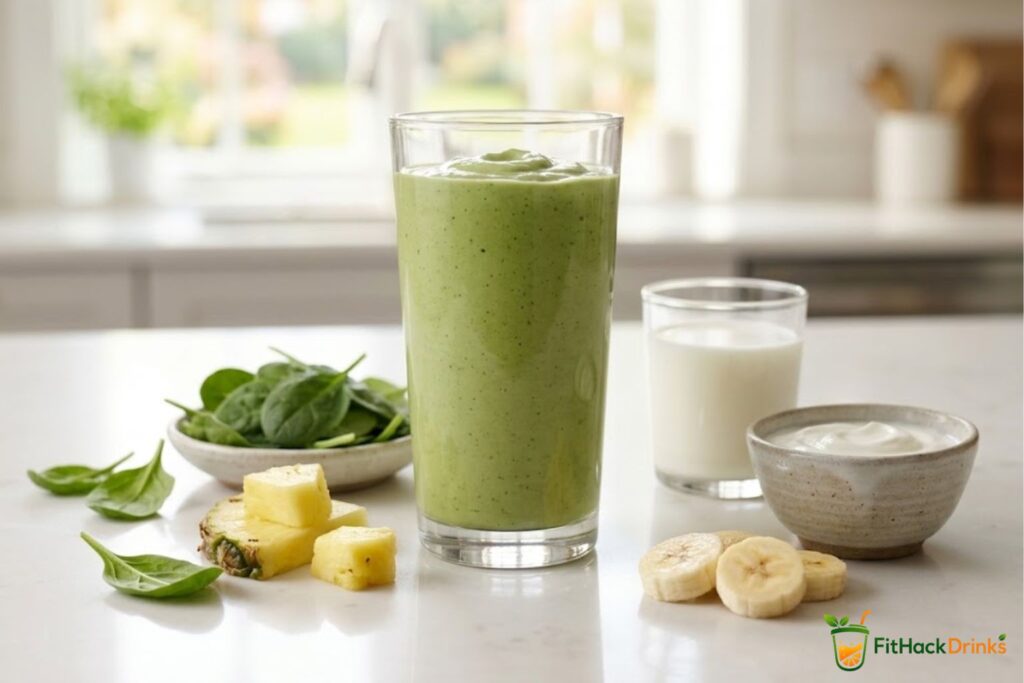
Ingredients (1 serving)
- 1 banana
- 1/2 cup pineapple chunks
- 1 cup spinach
- 1/2 cup full-fat Greek yogurt
- 1 cup whole milk
- 1 tablespoon honey
- 1/2 cup ice
Instructions
- Add the milk and Greek yogurt to the blender.
- Add the spinach, banana, and pineapple.
- Blend until the spinach is fully broken down.
- Add honey and ice, then blend again until smooth.
- Pour and enjoy right away.
Nutrition Per Serving (approximate)
- Calories: 470
- Protein: 20 g
- Carbohydrates: 68 g
- Fat: 13 g
Why It Works for Weight Gain Whole milk and Greek yogurt provide a strong calorie and protein base, while pineapple and banana add natural sweetness and extra carbohydrates.
Recipe Tip Freeze pineapple chunks ahead of time for a colder, thicker smoothie.
4. Coffee Protein Smoothie with Whey
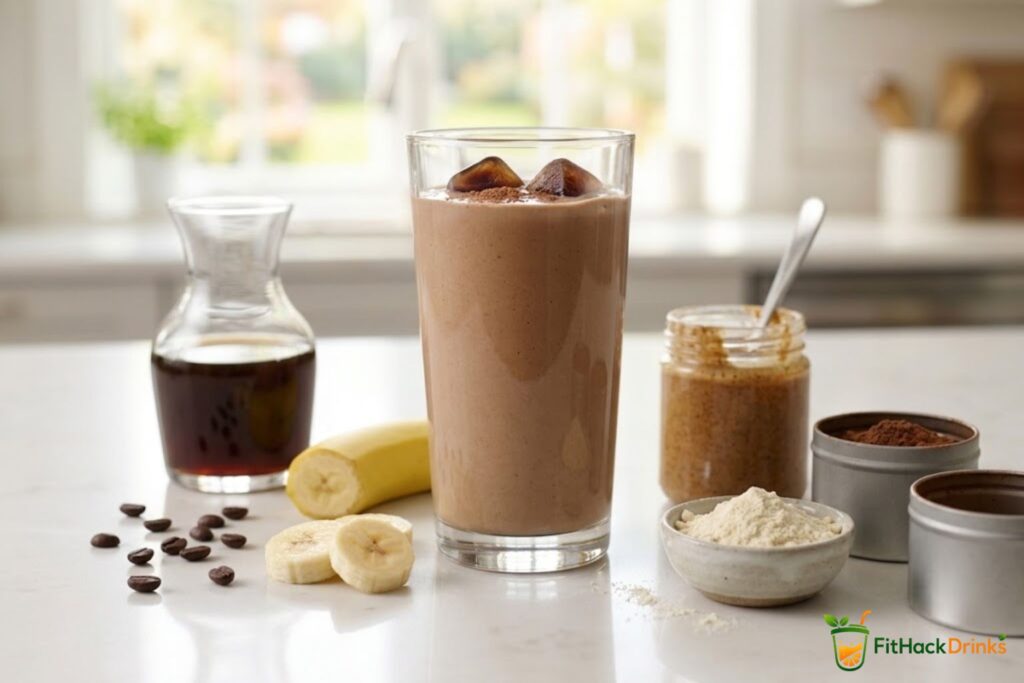
Ingredients (1 serving)
- 1/2 cup cold brewed coffee, chilled
- 1 banana
- 1 cup whole milk
- 1 scoop whey protein powder
- 1 tablespoon cocoa powder
- 1 tablespoon peanut or almond butter
- 1/2 cup ice
Instructions
- Pour the coffee and milk into the blender.
- Add the banana, whey protein, cocoa powder, and nut butter.
- Blend until smooth, about 30–40 seconds.
- Add ice and blend again until creamy.
- Serve in a tall glass.
Nutrition Per Serving (approximate)
- Calories: 500
- Protein: 32 g
- Carbohydrates: 48 g
- Fat: 18 g
Why It Works for Weight Gain Whey protein and whole milk provide a strong protein hit, while the banana and nut butter add calories and natural sweetness that balance the bitterness of the coffee.
Recipe Tip If you’re sensitive to caffeine, swap in decaf cold brew without changing anything else in the recipe.
5. Apple Cinnamon Hemp Heart Protein Smoothie
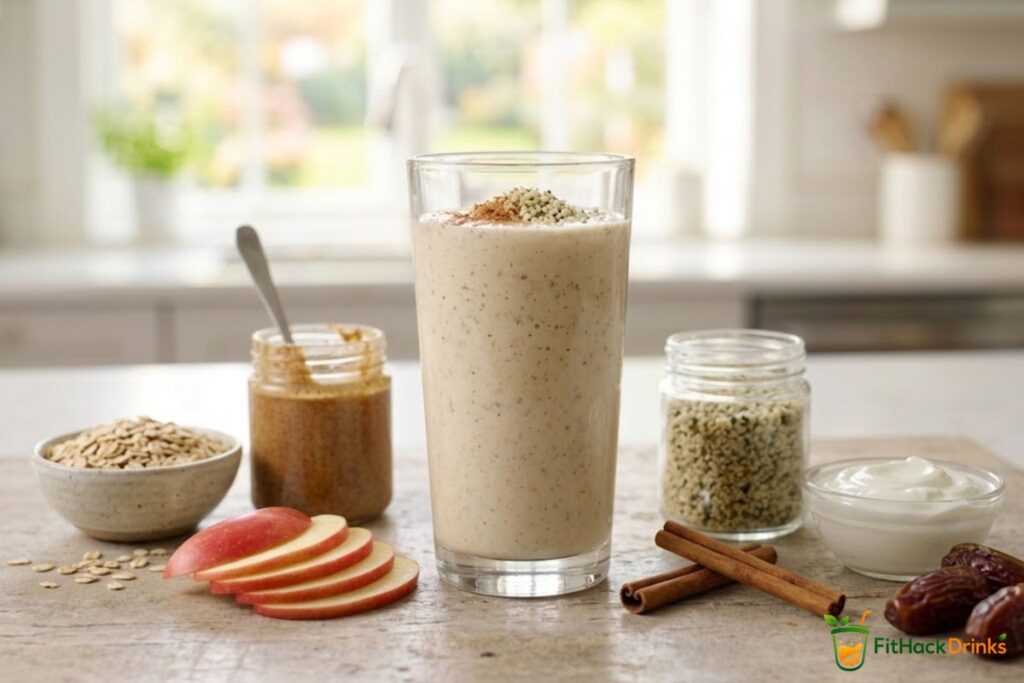
Ingredients (1 serving)
- 1 apple, cored and chopped
- 1 cup whole milk
- 1/3 cup rolled oats
- 2 tablespoons hemp hearts
- 1/2 cup Greek yogurt
- 1 tablespoon almond butter
- 1/2 teaspoon cinnamon
- 2 pitted dates
- 1/2 teaspoon vanilla extract
Instructions
- Add the milk, oats, and dates to the blender and let sit for 5 minutes to soften.
- Add the apple, Greek yogurt, almond butter, hemp hearts, cinnamon, and vanilla.
- Blend on high for 45–60 seconds until smooth.
- Adjust thickness with a splash of milk if needed.
- Serve immediately.
Nutrition Per Serving (approximate)
- Calories: 540
- Protein: 22 g
- Carbohydrates: 66 g
- Fat: 20 g
Why It Works for Weight Gain Oats and dates add slow-digesting carbohydrates and natural sweetness, while hemp hearts and almond butter contribute healthy fats and additional plant protein.
Recipe Tip Use a sweet apple variety like Honeycrisp or Fuji, and adjust the number of dates to taste.
6. Strawberry Banana Kefir Protein Smoothie
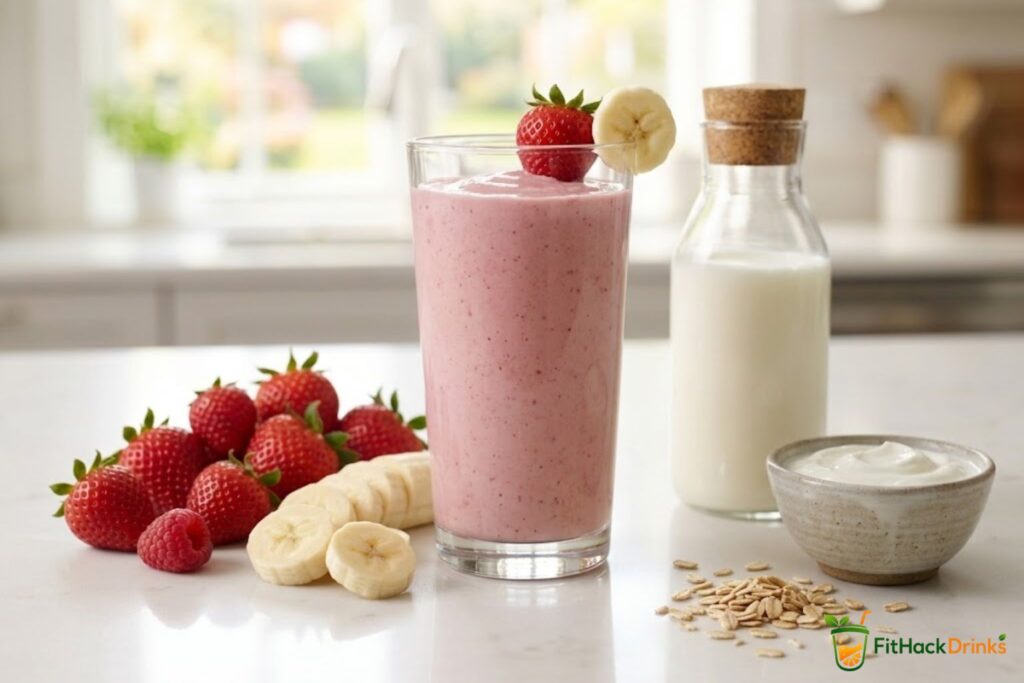
Ingredients (1 serving)
- 1 cup strawberries
- 1 banana
- 1 cup whole-milk kefir
- 1/4 cup rolled oats
- 1/2 cup Greek yogurt
- 1 tablespoon honey
- 1/2 cup ice
Instructions
- Add the kefir and oats to the blender first and let sit for a couple of minutes.
- Add the strawberries, banana, Greek yogurt, and honey.
- Blend until smooth.
- Add ice and blend again briefly.
- Pour and serve.
Nutrition Per Serving (approximate)
- Calories: 460
- Protein: 24 g
- Carbohydrates: 62 g
- Fat: 11 g
Why It Works for Weight Gain Kefir and Greek yogurt combine to boost protein while keeping the shake creamy, and the oats add extra carbohydrates and staying power.
Recipe Tip Frozen strawberries make the smoothie noticeably thicker without needing extra ice.
7. Chocolate Avocado Flaxseed Smoothie
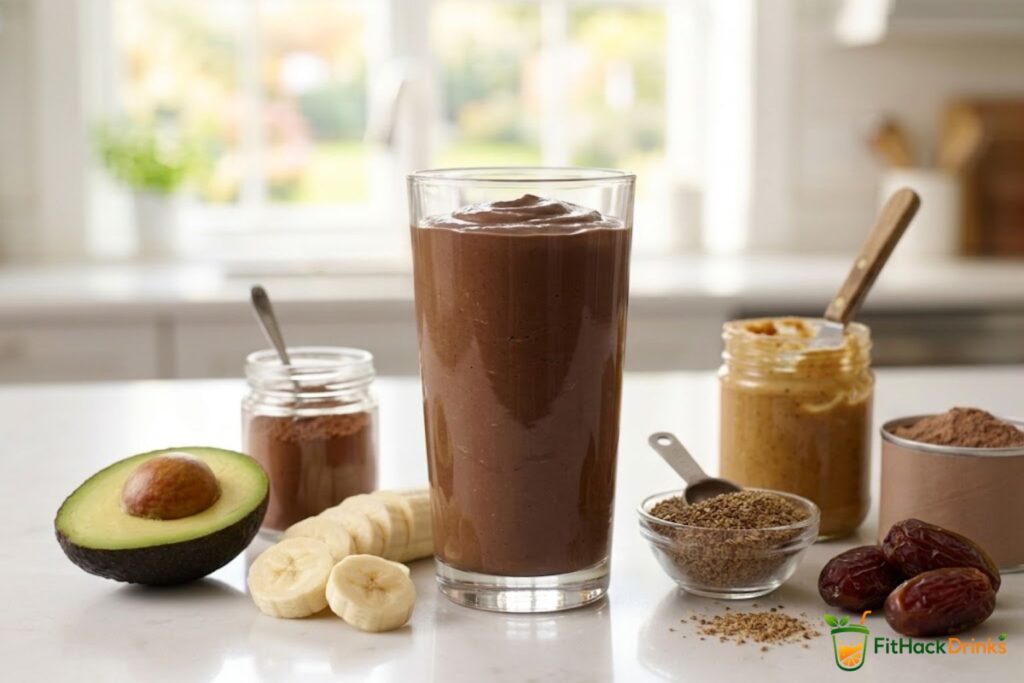
Ingredients (1 serving)
- 1/2 avocado
- 1 banana
- 1 cup whole milk
- 1 tablespoon cocoa powder
- 1 tablespoon ground flaxseed
- 1 tablespoon peanut butter
- 1 scoop chocolate protein powder
- 2 pitted dates
Instructions
- Add the milk to the blender first.
- Add the avocado, banana, dates, cocoa powder, flaxseed, peanut butter, and protein powder.
- Blend on high until completely smooth, about 45 seconds.
- Add a little extra milk if it’s too thick.
- Serve cold.
Nutrition Per Serving (approximate)
- Calories: 590
- Protein: 30 g
- Carbohydrates: 55 g
- Fat: 27 g
Why It Works for Weight Gain Avocado and flaxseed add concentrated healthy fats and calories, while the protein powder and milk keep the protein content high, making this one of the richer options on the list.
Recipe Tip Use a ripe, slightly soft avocado for the smoothest possible texture.
8. Blueberry Banana Silken Tofu Smoothie
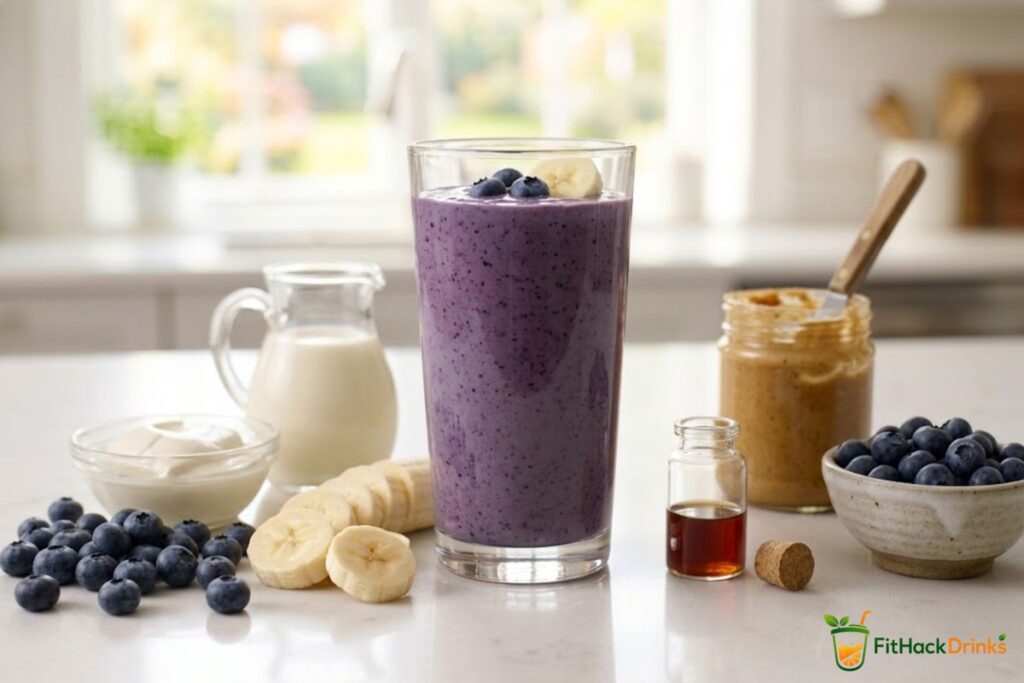
Ingredients (1 serving)
- 1/2 cup silken tofu
- 1/2 cup blueberries
- 1 banana
- 1 cup soy milk
- 1 tablespoon peanut butter
- 1 tablespoon honey
- 1/2 teaspoon vanilla extract
- 1/2 cup ice
Instructions
- Add the soy milk and silken tofu to the blender.
- Add the blueberries, banana, peanut butter, honey, and vanilla.
- Blend until fully smooth, about 40–50 seconds.
- Add ice and blend again.
- Serve right away.
Nutrition Per Serving (approximate)
- Calories: 430
- Protein: 20 g
- Carbohydrates: 58 g
- Fat: 13 g
Why It Works for Weight Gain Silken tofu is a smooth, dairy-free way to add plant protein and calories, while blueberries and banana keep the shake naturally sweet.
Recipe Tip Silken tofu blends far more smoothly than firm tofu, so it’s worth seeking out for shakes specifically.
9. 1,000-Calorie Whey Protein Smoothie
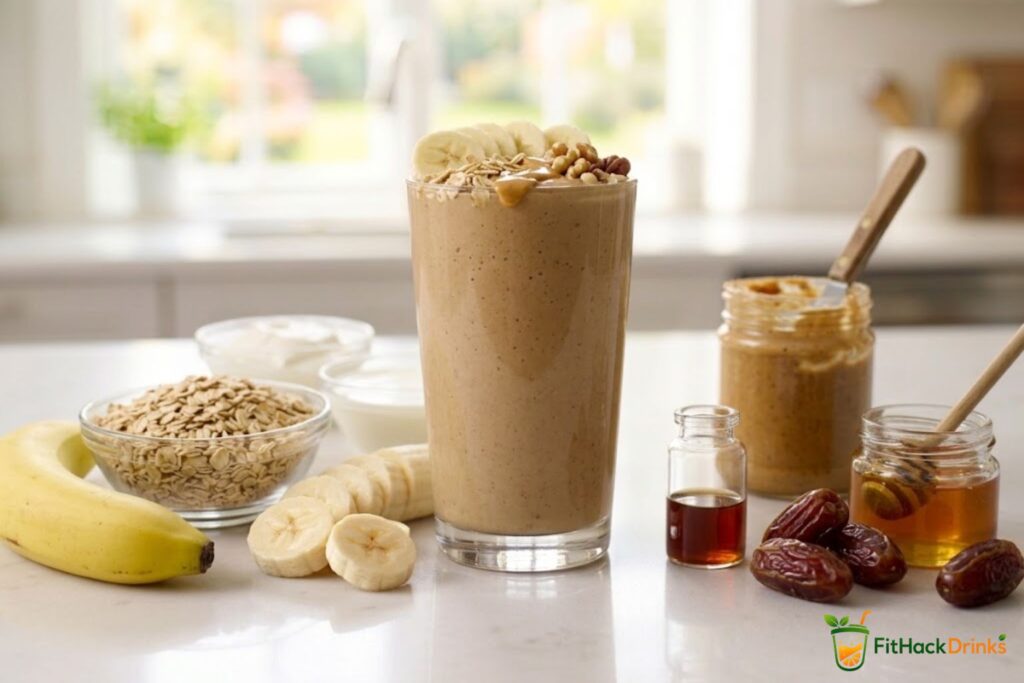
Ingredients (1 serving)
- 1.5 cups whole milk
- 1 large banana
- 1/2 cup rolled oats
- 2 tablespoons peanut butter
- 1 scoop whey protein powder
- 1/2 cup Greek yogurt
- 1 tablespoon honey
- 3 pitted dates
Instructions
- Add the milk and oats to the blender and let soften for a few minutes.
- Add the banana, dates, peanut butter, Greek yogurt, honey, and whey protein.
- Blend on high for 60 seconds, until completely smooth.
- Check consistency; add a splash of milk if it’s too thick to drink comfortably.
- Serve in a large glass.
Nutrition Per Serving (approximate)
- Calories: 1,010
- Protein: 52 g
- Carbohydrates: 110 g
- Fat: 34 g
Why It Works for Weight Gain This recipe is built specifically to hit around 1,000 calories, combining whole milk, oats, peanut butter, dates, and whey protein so it can stand in as a substantial extra meal on days when eating enough solid food is difficult.
Recipe Tip If 1,000 calories feels like too much at once, split it into two smaller servings across the day rather than skipping it.
10. Chocolate Peanut Butter Casein Smoothie
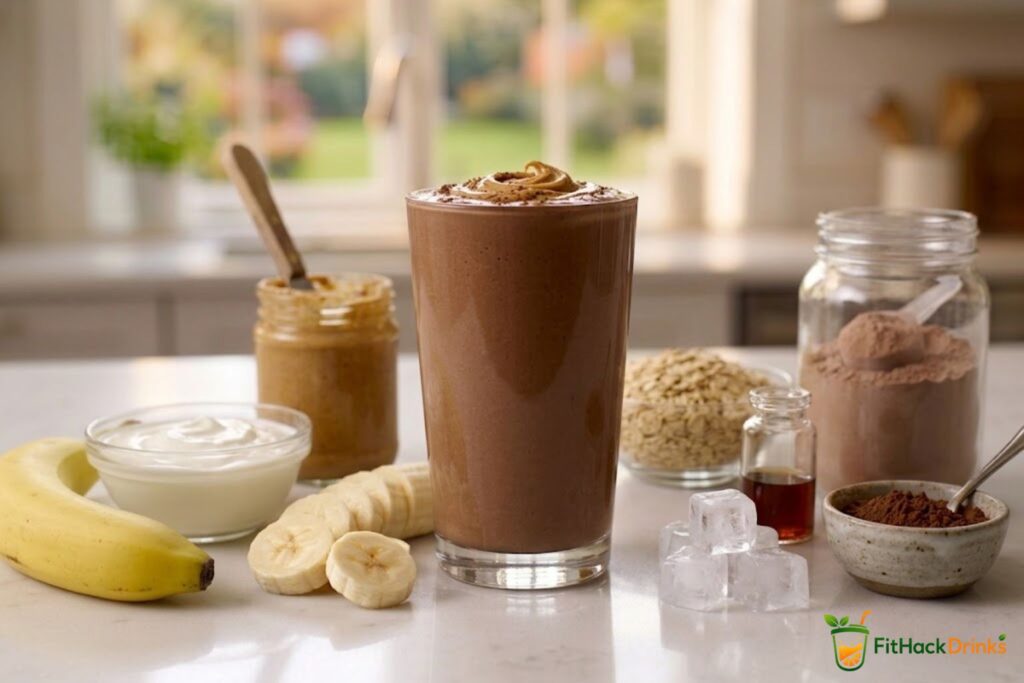
Ingredients (1 serving)
- 1 scoop casein protein powder
- 1 cup whole milk
- 1 banana
- 1 tablespoon peanut butter
- 1 tablespoon cocoa powder
- 1/2 cup Greek yogurt
- 1/2 cup ice
Instructions
- Add the milk and casein protein to the blender first.
- Add the banana, peanut butter, cocoa powder, and Greek yogurt.
- Blend until smooth — casein can take slightly longer to fully incorporate than whey.
- Add ice and blend again until thick and creamy.
- Serve immediately, or chilled after a short rest in the fridge.
Nutrition Per Serving (approximate)
- Calories: 520
- Protein: 34 g
- Carbohydrates: 46 g
- Fat: 20 g
Why It Works for Weight Gain Casein is a milk protein that digests more slowly than whey, releasing amino acids gradually. That makes this shake a good option before bed or between meals, when you want steady protein availability over a longer stretch of time.
Recipe Tip Let the shake sit for a minute after blending, casein tends to thicken slightly as it rests.
11. Green Banana Smoothie with Pea Protein
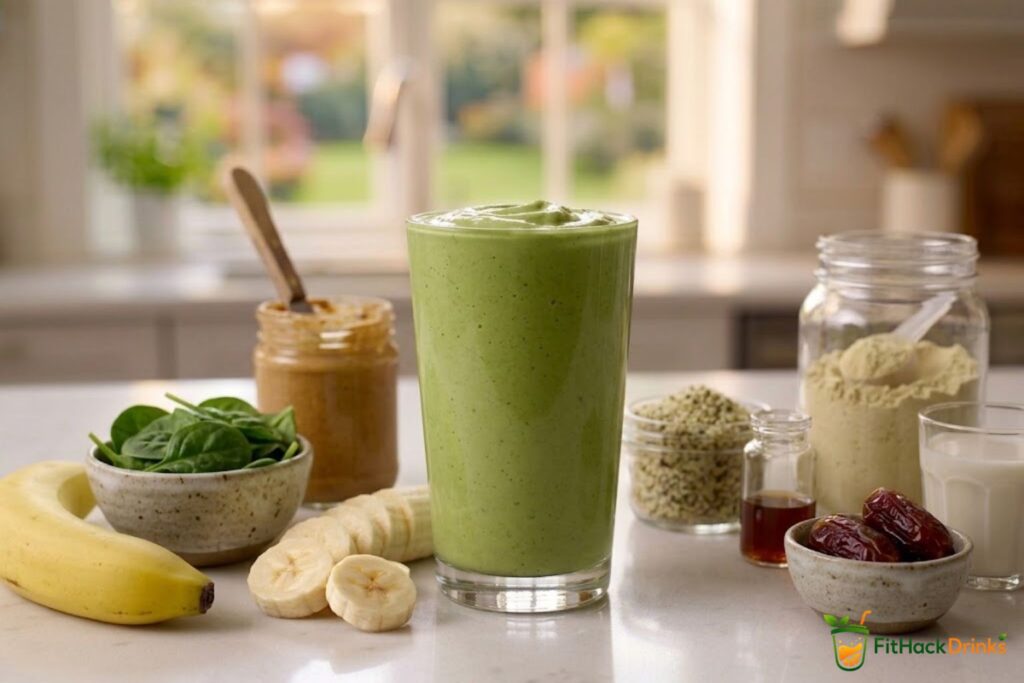
Ingredients (1 serving)
- 1 banana
- 1 scoop pea protein powder
- 1 cup soy or oat milk
- 1 cup spinach
- 1 tablespoon peanut butter
- 1 tablespoon hemp hearts
- 2 pitted dates
- 1/2 cup ice
Instructions
- Add the soy or oat milk to the blender.
- Add the spinach, banana, dates, peanut butter, hemp hearts, and pea protein.
- Blend on high until the spinach is fully broken down and the mixture is smooth.
- Add ice and blend again.
- Serve chilled.
Nutrition Per Serving (approximate)
- Calories: 490
- Protein: 27 g
- Carbohydrates: 56 g
- Fat: 17 g
Why It Works for Weight Gain This fully plant-based recipe combines pea protein with peanut butter and hemp hearts to reach a solid protein and calorie total without any dairy or animal products, making it a good option for vegan readers.
Recipe Tip Use a plant milk with at least some fat content, like full-fat oat milk, for a creamier result.
12. Pumpkin Pie Shake with Egg White Protein
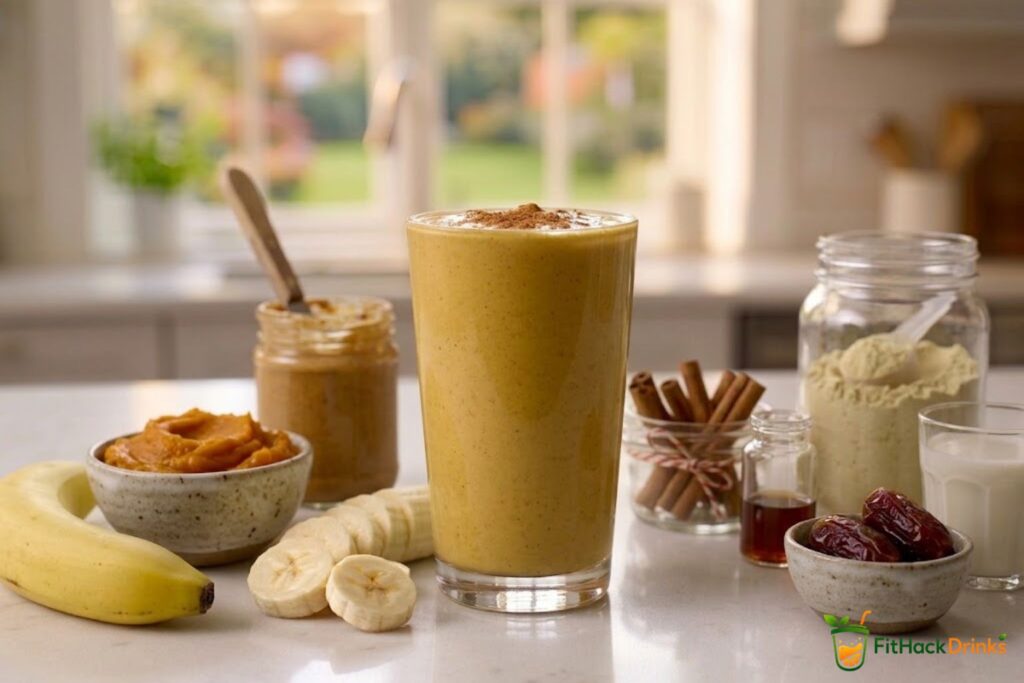
Ingredients (1 serving)
- 1/2 cup pumpkin puree
- 1 banana
- 1 cup whole milk
- 1 scoop egg-white protein powder
- 1 tablespoon almond butter
- 1/2 teaspoon cinnamon
- 1/4 teaspoon pumpkin pie spice
- 1/2 teaspoon vanilla extract
- 1/2 cup ice
Instructions
- Add the milk and pumpkin puree to the blender.
- Add the banana, egg-white protein, almond butter, cinnamon, pumpkin pie spice, and vanilla.
- Blend on high until smooth and creamy, about 45 seconds.
- Add ice and blend again.
- Pour into a glass and top with a light dusting of cinnamon before serving.
Nutrition Per Serving (approximate)
- Calories: 480
- Protein: 28 g
- Carbohydrates: 50 g
- Fat: 17 g
Why It Works for Weight Gain Pumpkin puree and banana add natural sweetness and carbohydrates, while egg-white protein and almond butter round out the shake with lean protein and healthy fat, all with a cozy, dessert-like flavor.
Recipe Tip Add a small pinch of cinnamon on top just before serving for extra aroma and presentation.
How These Protein Shakes Support Healthy Weight Gain
Weight gain, at its core, comes down to a calorie surplus, consistently taking in more calories than your body uses. Protein shakes make it easier to reach that surplus because they let you add several hundred calories in liquid form, which many people find easier to consume than an equivalent amount of solid food, especially if appetite is a challenge.
Protein plays a specific role beyond just calories: it supports muscle repair and growth, which matters if part of your goal is building strength or muscle mass rather than gaining weight in an unstructured way. Carbohydrates from fruit, oats, and dates provide readily available energy, while healthy fats from nut butters, avocado, and seeds add concentrated calories in a relatively small volume. Using nutrient-dense ingredients, rather than relying purely on sugar or highly processed additions, also means these shakes contribute real nutritional value, not just empty calories.
It’s important to keep the bigger picture in mind: a protein shake doesn’t automatically cause weight gain on its own. It helps when it contributes meaningfully to your overall daily calorie and protein intake, alongside regular meals — not as an occasional extra, but as a consistent part of your routine.
How to Make a Protein Shake More Calorie-Dense
If a shake isn’t providing enough calories on its own, there are several simple ways to boost it further:
- Peanut or almond butter – adds healthy fats and 90–100 calories per tablespoon.
- Oats – contribute complex carbohydrates and a thicker texture.
- Whole milk – swap in for water or low-fat milk for a meaningful calorie increase.
- Greek yogurt – adds both protein and creaminess.
- Avocado – blends smoothly and adds fat-based calories without a strong flavor.
- Dates – a natural way to sweeten a shake while adding carbohydrates.
- Honey – another simple way to add quick-digesting carbs.
- Seeds (flax, chia, hemp) – small additions that add healthy fats and a bit of extra protein.
The goal is to build calories from a mix of whole, nutrient-dense ingredients rather than leaning on heavily processed additives. A shake made with real food ingredients like these tends to be more satisfying and nutritionally useful than one built around sugary syrups or artificial creamers.
Best Time to Drink a Protein Shake for Weight Gain
There’s no single “best” time that works for everyone, it largely depends on your schedule and appetite patterns. That said, a few common approaches work well:
- Breakfast – useful if you tend to skip or under-eat in the morning.
- Between meals – a good way to add extra calories without needing to prepare a full snack.
- After exercise – supports recovery and adds calories back after a workout.
- Evening snack – helps close any calorie gap left from the day’s meals.
- Before bed – a slower-digesting option, like a casein-based shake, can provide protein overnight.
What matters most isn’t the specific hour you drink your shake — it’s your total calorie and protein intake across the full day. Pick a time that fits naturally into your routine so you’ll actually stick with it consistently.
Tips for Using Protein Shakes for Healthy Weight Gain
- Don’t replace every meal with a shake, they work best as an addition to regular eating, not a substitute for it.
- Build the rest of your diet around balanced meals with protein, carbs, fats, and vegetables.
- Choose nutrient-dense ingredients over sugary syrups or artificial mix-ins.
- Increase your calorie intake gradually rather than all at once, to avoid digestive discomfort.
- Spread protein intake across the day instead of concentrating it in one meal or shake.
- Stay well hydrated, especially if you’re adding more fiber and protein to your diet.
- If your goal includes muscle gain, pair these shakes with a consistent strength-training routine — diet alone won’t build muscle without the training stimulus.
Storage & Make-Ahead Tips
These shakes are best enjoyed fresh, right after blending, since texture and flavor can change once ingredients like banana or avocado sit for a while. If you do have leftovers, refrigerate them promptly in a sealed container and try to drink them within a day. Always use clean containers and utensils, and keep dairy-based shakes refrigerated at all times rather than leaving them out at room temperature. To make prep easier ahead of time, pre-portion and freeze fruit in bags so you can blend a shake quickly whenever you need one. If a stored shake separates, simply give it a quick re-blend or shake before drinking.
Nutrition Notes
The nutrition values listed for each recipe are estimates, calculated from the specific ingredients and amounts used. Actual numbers can vary depending on factors like the type of milk you choose, the brand of protein powder or yogurt, the size of your fruit, the specific nut butter used, and how closely you follow the listed serving size. If you’re tracking your intake closely, for example, to hit a specific daily calorie target, it’s worth calculating nutrition based on the exact brands and products you’re using rather than relying solely on the estimates above.
FAQs
Can protein shakes help you gain weight?
Yes, when they add extra calories and protein on top of your regular meals rather than replacing them, protein shakes can support a calorie surplus, which is what’s needed for weight gain.
What is the best protein shake for weight gain?
The best shake is one that combines protein, carbohydrates, and healthy fats in a way that fits your calorie goals and taste preferences, there’s no single universal answer, which is why this list includes a range of options.
How many protein shakes should I drink a day?
This depends on your total calorie needs and how much you’re already eating through regular meals; one to two shakes a day is a common starting point for most people trying to gain weight.
Can I gain weight without protein powder?
Yes, ingredients like Greek yogurt, whole milk, oats, nut butter, and dates can provide plenty of protein and calories without needing a protein powder at all.
What ingredients add the most calories to a shake?
Nut butters, whole milk, avocado, oats, and dried fruit like dates are among the most calorie-dense additions you can use.
Are homemade protein shakes healthy?
Yes, when made with whole-food ingredients like fruit, dairy or plant milk, nut butter, and yogurt, homemade shakes can be a nutritious part of a weight-gain diet.
Can I drink protein shakes every day?
For most people, yes, as long as the shakes are part of a varied, balanced diet rather than a replacement for whole foods.
Can I drink a protein shake before bed?
Yes, a slower-digesting option like the casein-based shake can be a good choice before bed, providing a steady release of protein overnight.
Are these shakes good for muscle gain?
They can support muscle gain when combined with resistance training and adequate overall protein intake, the shakes alone won’t build muscle without the training stimulus.
Can I make these protein shakes without dairy?
Yes, several recipes on this list, like the silken tofu and pea protein smoothies, use dairy-free ingredients, and others can be adapted by swapping in plant-based milk and yogurt alternatives.
Conclusion
These 12 healthy protein shake recipes for weight gain offer a wide range of options — from classic peanut butter and chocolate combinations to fruity berry blends, a coffee-flavored pick-me-up, and fully plant-based choices using tofu or pea protein. Whether you prefer dairy or dairy-free, fruity or chocolatey, or need something specifically calorie-dense like the 1,000-calorie whey shake, there’s a recipe here to fit your taste and goals.
Remember that healthy weight gain ultimately comes from your overall diet — consistent calories, adequate protein, and balanced meals — with shakes acting as a convenient, nutrient-dense addition rather than a replacement. Try a few of these recipes, see which ones fit best into your routine, and choose the ones that match your calorie and protein needs most closely.