
If you love the taste of Middle Eastern dips but don’t have tahini in your pantry, you are in the right place! Hummus is one of the most famous snacks in the world, known for its smooth texture and savory flavor. While traditional recipes always include tahini (sesame paste), many people are looking for a hummus recipe without tahini that still tastes authentic and creamy.
In this guide, we will show you how to make a delicious, budget-friendly, and 100% halal hummus using simple ingredients like canned chickpeas and high-quality olive oil. This version is perfect for those with nut or sesame allergies, or for anyone who wants a lighter, lower-calorie version of their favorite dip. Let’s learn how to whip up this healthy treat in just five minutes!
What Is Hummus?

In simple English, hummus is a thick, savory spread made from cooked, mashed chickpeas. The word “hummus” actually means “chickpea” in Arabic. This dish has deep roots in Middle Eastern culture, where it has been served for centuries as a staple part of breakfast, lunch, and dinner.
Traditionally, hummus is made by blending chickpeas with tahini, lemon juice, garlic, and salt. It is popular worldwide because it is incredibly versatile and healthy. However, the tahini-free version is gaining popularity because it highlights the natural, earthy flavor of the chickpeas and makes the dish much easier to prepare if you cannot find specialized sesame paste at your local grocery store.
Why Make Hummus Without Tahini?
You might wonder, “Can hummus really be good without tahini?” The answer is a loud yes! Here are a few reasons why people prefer a hummus recipe without tahini:
- Tahini Allergy or Dislike: Many people are allergic to sesame seeds or simply find the bitter, nutty taste of tahini too strong.
- Not Easily Available: While chickpeas are in every store, tahini can be hard to find and quite expensive.
- Lighter Taste and Fewer Calories: Tahini is very high in fat and calories. By skipping it, you create a lighter dip that is better for weight management.
- Budget-Friendly: You likely already have oil, lemons, and garlic in your kitchen. This makes it a very cheap homemade snack.
- Still Creamy: With the right technique and a bit of extra olive oil or chickpea liquid, you can achieve a professional, silky texture without the sesame paste.
Ingredients for Hummus Recipe Without Tahini
To get the best results, use fresh ingredients. All items listed here are 100% halal and naturally plant-based.
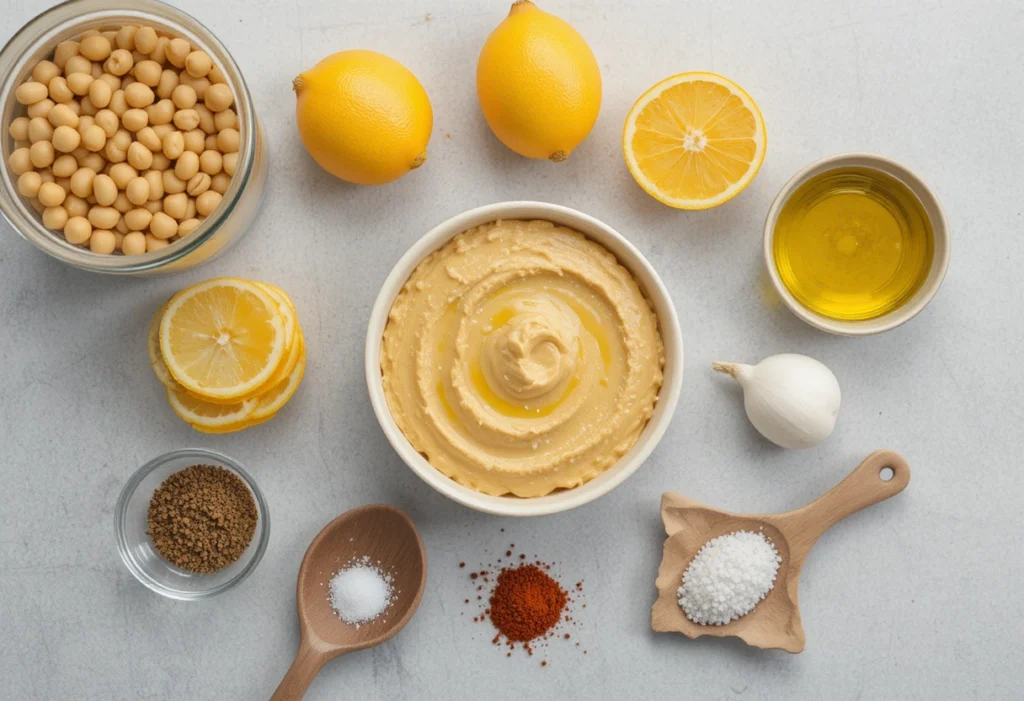
Main Ingredients (Halal & Simple)
| Ingredient | Quantity | Purpose |
|---|---|---|
| Canned Chickpeas | 2 (15-ounce) cans | The hearty, protein-packed base. |
| Extra Virgin Olive Oil | 6 tablespoons | Provides richness and healthy fats. |
| Fresh Lemon Juice | 5 tablespoons | Adds the essential tangy “zing.” |
| Fresh Garlic | 3 cloves | For a bold, savory aroma. |
| Sea Salt | 1 teaspoon | To balance and enhance flavors. |
| Ground Coriander | 1 teaspoon | Adds a mild, floral citrus note. |
| Ground Cumin | 1/8 teaspoon | For an earthy, authentic Middle Eastern depth. |
| Cayenne Pepper | 1/8 teaspoon | Adds a tiny hint of warmth (optional). |
Optional Ingredients (For Extra Flair)
- Chickpea Liquid (Aquafaba): 2–4 tablespoons reserved from the can to help with creaminess.
- Cold Water: A splash to adjust the consistency if the dip is too thick.
- Paprika: A dusting on top for a beautiful red color.
- Fresh Parsley: Chopped finely for a garden-fresh garnish.
- Extra Olive Oil: A small drizzle on top just before serving.
Note: This recipe contains no alcohol, non-halal animal products, or hidden haram additives.
Kitchen Tools You Will Need
You don’t need much equipment to master this hummus recipe without tahini:
- Food Processor or High-Speed Blender: This is necessary to turn the chickpeas into a smooth paste.
- Measuring Spoons and Cups: To ensure the perfect balance of acid and fat.
- Rubber Spatula: For scraping down the sides of the blender.
- Serving Bowl: To present your masterpiece!
How to Make Hummus Without Tahini (Step-by-Step)
Follow these easy steps to create the creamiest hummus you’ve ever tasted.
Step 1: Prepare the Chickpeas
Open the cans of chickpeas. Drain them into a strainer, but do not throw away all the liquid! Save about half a cup of the liquid (aquafaba). Rinse the chickpeas under cold water. Expert Tip: For the smoothest hummus, you can quickly pinch the skins off the chickpeas. This takes a few minutes but results in a much silkier texture.
Step 2: Blend the Ingredients
Place the chickpeas, garlic cloves, fresh lemon juice, olive oil, salt, coriander, cumin, and cayenne pepper into your food processor. Pulse a few times to break down the chickpeas, then blend on high for 1 minute.
Step 3: Adjust the Texture
While the processor is running, slowly pour in 2 tablespoons of the reserved chickpea liquid or cold water. Continue blending for another 2 minutes. The hummus should start looking pale and very smooth. If it still looks chunky, add one more tablespoon of liquid and keep blending.
Step 4: Taste and Adjust
Taste your hummus. Does it need more salt? Is it tangy enough? Add an extra squeeze of lemon or a pinch of salt if needed. Blend one final time for 30 seconds to lock in the flavors.
Tips for the Creamiest Hummus Without Tahini
- Use Room-Temperature Ingredients: Chickpeas blend much better when they are not ice-cold from the fridge.
- Blend Longer Than You Think: Most people stop blending too early. To get that “restaurant-style” feel, let the processor run for a full 3 to 4 minutes.
- The Ice Cube Trick: Adding one small ice cube while blending helps create a light, whipped texture that is incredibly satisfying.
- Quality Oil: Since there is no tahini, the flavor of the olive oil is very important. Use the best “Extra Virgin” oil you can afford.
Health Benefits of Hummus Without Tahini
Choosing this hummus recipe without tahini is a great choice for your body:
- High in Plant-Based Protein: Chickpeas are an amazing source of protein for vegetarians and those looking to reduce meat intake.
- Rich in Fiber: This dip is great for your digestive system and helps you feel full longer.
- Heart-Healthy Fats: Olive oil is a “good fat” that supports heart health and glowing skin.
- Naturally Vegan & Halal: It is a safe choice for almost any diet.
- Lower Calories: By removing tahini, you save roughly 80–100 calories per serving.
Is Hummus Without Tahini Healthy?
Yes! When you compare the nutritional profile, a tahini-free hummus is generally lower in saturated fat but still provides all the vitamins and minerals of the chickpeas. It is an excellent snack for weight management because it provides “volume” and fiber without the heavy calorie count of sesame oil. It fits perfectly into a Mediterranean or low-fat diet.
How to Serve Hummus Without Tahini
This dip is incredibly versatile. Here is how you can enjoy it:

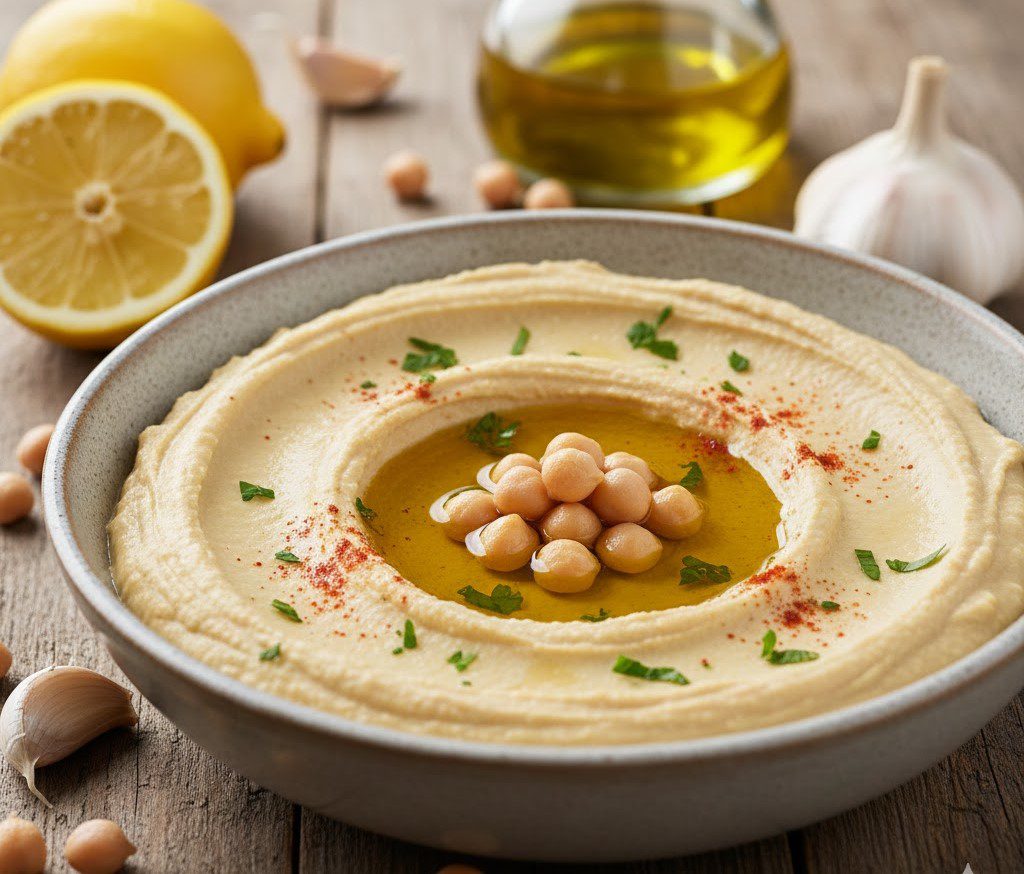
- Classic Style: Serve in a shallow bowl with a well in the center filled with olive oil and a sprinkle of paprika. Pair with warm pita bread.
- Healthy Veggie Tray: Use it as a dip for carrot sticks, cucumber slices, bell peppers, and celery.
- Sandwich Spread: Replace mayonnaise on your turkey or chicken sandwiches with this creamy hummus for a healthy boost.
- Middle Eastern Platter: Serve alongside falafel, grilled halal chicken, and a fresh salad.
Storage and Shelf Life
- Refrigeration: Store your homemade hummus in an airtight container in the fridge. It will stay fresh for 4 to 5 days.
- Separation: It is normal for a little oil to rise to the top. Just give it a quick stir before eating.
- Freezing: You can freeze hummus! Place it in a freezer-safe bag for up to 3 months. Thaw it in the fridge overnight and stir well before serving.
Common Mistakes to Avoid
- Using Too Much Garlic: Raw garlic is very strong. Start with 2 or 3 cloves; you can always add more, but you can’t take it out!
- Skipping the reserved liquid: Using only oil can make the hummus feel too heavy. The chickpea liquid adds “fluffiness.”
- Not blending enough: Chunky hummus is usually just a result of not blending it long enough.
- Using Bottled Lemon Juice: Bottled juice has a “chemical” aftertaste. Freshly squeezed lemons make a world of difference.
FAQs
Q1: Can I make hummus without tahini taste good?
A: Yes! The combination of ground coriander, cumin, and extra olive oil provides plenty of savory, rich flavor that replaces the need for tahini.
Q2: What can replace tahini in hummus?
A: High-quality olive oil and the natural liquid from the chickpea can (aquafaba) are the best replacements for texture and moisture.
Q3: Is a hummus recipe without tahini halal?
A: Yes, this recipe is 100% halal. It uses only plant-based ingredients and contains no alcohol or haram additives.
Q4: Can I make this without a food processor?
A: You can use a strong blender, but you may need to add a little more liquid to help the blades turn.
Q5: How long does homemade hummus last?
A: It lasts for about 4 to 5 days in the refrigerator when stored in a sealed container.
Final Thoughts
Making a hummus recipe without tahini is a smart, healthy, and easy way to enjoy a world-class snack at home. It is budget-friendly, allergy-safe, and takes almost no time to prepare. Whether you are hosting a party or just need a nutritious lunch for your family, this creamy halal dip is guaranteed to satisfy. Try making a batch today—your body and your taste buds will thank you!
Hummus Recipe Without Tahini

Ingredients
- 2 15-ounce cans chickpeas, drained (liquid reserved)
- 6 tablespoons extra virgin olive oil
- 5 tablespoons fresh lemon juice
- 3 cloves garlic
- 1 teaspoon salt
- 1 teaspoon ground coriander
- ⅛ teaspoon ground cumin
- ⅛ teaspoon cayenne pepper optional
Instructions
- Drain chickpeas and reserve some liquid. Rinse chickpeas well.
- Add chickpeas, garlic, lemon juice, olive oil, salt, coriander, cumin, and cayenne to a food processor.
- Blend for 1 minute, scrape sides, then blend again.
- Slowly add chickpea liquid or water until smooth and creamy.
- Taste and adjust salt or lemon if needed.
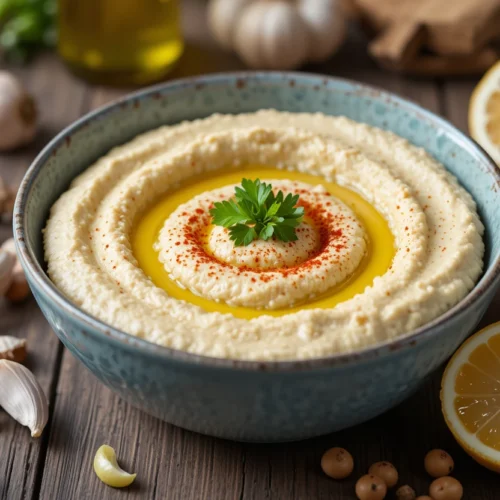
- Serve with olive oil drizzle and paprika.